
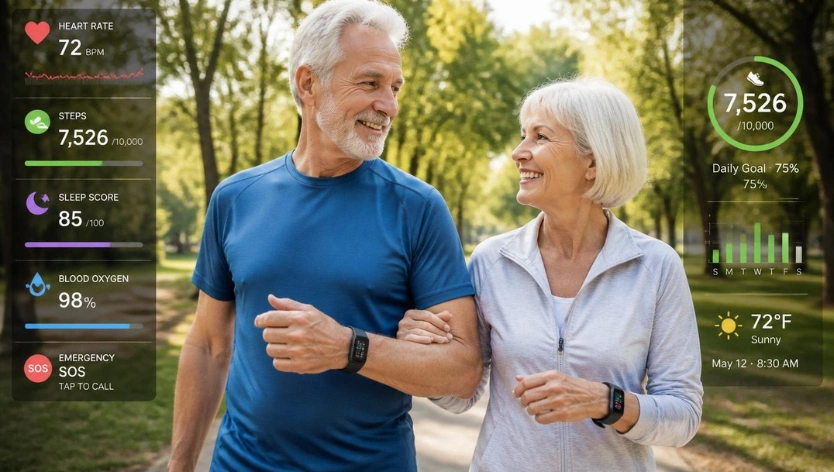
Quick Answer: What Is the Best Fitness Tracker for Seniors?
The best fitness tracker for seniors is one that is comfortable, easy to operate and offers useful activity and wellness features without unnecessary complexity. The Fitbit Charge 6 is a strong all-around option, the Fitbit Inspire 3 is suitable for beginners, the Apple Watch SE 3 offers additional safety and connectivity features for iPhone users, and the Garmin vívosmart 5 provides straightforward fitness tracking with up to seven days of battery life.
Before buying, consider display readability, battery life, phone compatibility, charging convenience and whether the device includes the specific safety features you need.
Introduction
Choosing a fitness tracker for seniors is not necessarily about finding the smartwatch with the most sensors or the longest list of features. For many older adults, a comfortable design, readable display, straightforward controls and reliable battery life are more valuable than advanced sports analytics or a large collection of apps.
Wearable technology can make everyday activity easier to monitor. A fitness tracker can record steps, estimate distance, monitor heart rate, track sleep and provide reminders to move. Some smartwatches also include safety features such as Fall Detection, Emergency SOS and location sharing.
However, not every fitness tracker offers these capabilities. A basic activity band may be sufficient for someone who wants to monitor walking habits, while another person may prefer a full smartwatch with emergency communication and smartphone connectivity.
This guide compares four options worth considering in 2026: Fitbit Charge 6, Fitbit Inspire 3, Apple Watch SE 3 and Garmin vívosmart 5. The recommendations focus on practical usability, features, battery life and compatibility rather than assuming that the most expensive device is automatically the best.
Check Out : Best Smartwatch for Fitness and Style With Discounts
Quick Comparison: Best Fitness Trackers for Seniors
| Device | Price | Best For | GPS | Estimated Battery Life | Main Strength |
| Fitbit Charge 6 | $159.95 | Overall fitness tracking | Built-in GPS | Up to 7 days | Broad fitness and wellness features |
| Fitbit Inspire 3 | $99.95 | Beginners | Connected GPS | Up to 10 days | Lightweight design and simplicity |
| Apple Watch SE 3 | $249 | iPhone users and safety features | Built-in GPS | Up to 18 hours | Smartwatch connectivity and safety tools |
| Garmin vívosmart 5 | $139.99 | Everyday activity tracking | Connected GPS | Up to 7 days | Lightweight design and wellness insights |
Battery estimates are manufacturer figures under specified conditions. Actual results vary with settings, GPS use, notifications, display settings and other factors. Connected GPS requires a compatible paired phone.
4 Fitness Trackers and Smartwatches for Seniors Worth Considering
The following devices serve different needs. Some are simple fitness bands, while others offer a broader smartwatch experience. They are a research-based shortlist, not a ranking based on hands-on testing by BestFindDeal.
1. Fitbit Charge 6: Best Overall Balance of Fitness and Smart Features
The Fitbit Charge 6 is a good option for older adults who want more detailed activity and wellness tracking without wearing a full-size smartwatch.
Its compact design includes a color AMOLED display and a range of everyday fitness features. Users can monitor steps, distance, heart rate, sleep patterns and exercise activity through the tracker and the Google Health app.
Key features include:

- Continuous heart-rate tracking
- Built-in GPS for outdoor activities
- Sleep tracking and sleep score
- Blood oxygen (SpO2) tracking
- ECG app support in eligible regions
- More than 40 exercise modes
- High and low heart-rate notifications
- Up to seven days of estimated battery life
One advantage is its built-in GPS. Users can record outdoor walking and running routes without carrying a phone for GPS data.
The ECG feature can provide an assessment of heart rhythm for possible signs of atrial fibrillation in supported markets. It is not a continuous ECG monitor or a substitute for medical evaluation. Availability and eligibility requirements should be checked before purchasing.
The Charge 6 also connects with Google’s health platform, where users can review more detailed activity and wellness information. Some advanced insights, coaching and content require a Google Health Premium membership.
Its main limitation for some seniors may be its relatively small screen and reliance on the companion app for detailed information. It also does not provide the same fall-detection and emergency-calling experience as an Apple Watch.
Best for: Seniors who want a compact fitness tracker with built-in GPS, heart-rate monitoring, sleep tracking and additional wellness features.
2. Fitbit Inspire 3: Best Simple Fitness Tracker for Beginners
The Fitbit Inspire 3 is worth considering for older adults who want a lightweight fitness band without the complexity of a full smartwatch.
It focuses on everyday activity and wellness tracking rather than advanced communication or safety tools. Its slim design is lightweight, making it suitable for people who prefer a smaller device on their wrist.
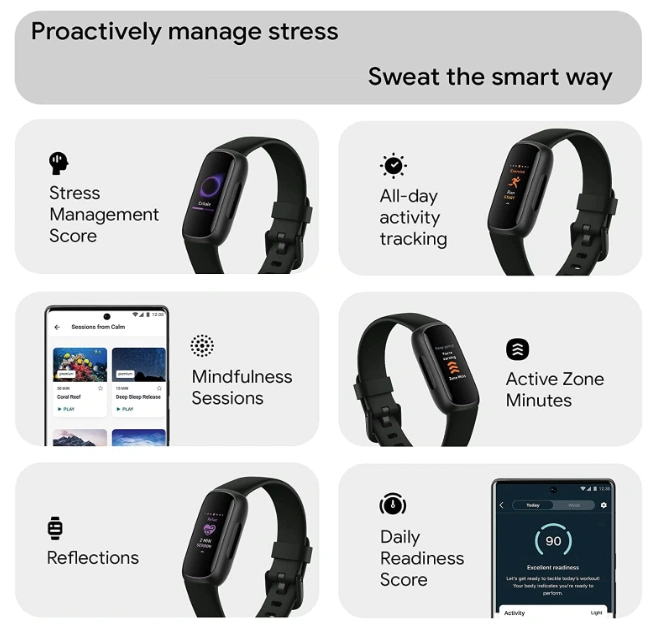
Key features include:
- Step and distance tracking
- Continuous heart-rate monitoring
- Sleep tracking and sleep stages
- Sleep score
- Blood oxygen tracking
- Activity reminders
- Stress-management information
- Up to 10 days of estimated battery life
The Inspire 3 is particularly useful for monitoring everyday walking habits and sleep patterns. Its activity reminders can also encourage users to move after periods of inactivity.
Unlike the Charge 6, the Inspire 3 does not have built-in GPS. It uses connected GPS through a compatible smartphone for outdoor distance and route information.
It also does not include an ECG app, fall detection or standalone emergency calling. Buyers should not confuse its health and wellness tracking features with medical monitoring.
The smaller screen is another consideration. Although the device is lightweight, users who prefer large text and more visible controls may find a larger smartwatch easier to operate.
Best for: Seniors who want a lightweight, relatively simple fitness band for steps, heart rate, sleep and everyday activity.
3. Apple Watch SE 3: Best Smartwatch for Seniors Using an iPhone
The Apple Watch SE 3 is a better choice for older adults who want more than basic fitness tracking. It combines activity monitoring with communication, smartphone apps and several safety features.
Its always-on Retina display, familiar watch interface and integration with the iPhone make it a versatile option for everyday use.
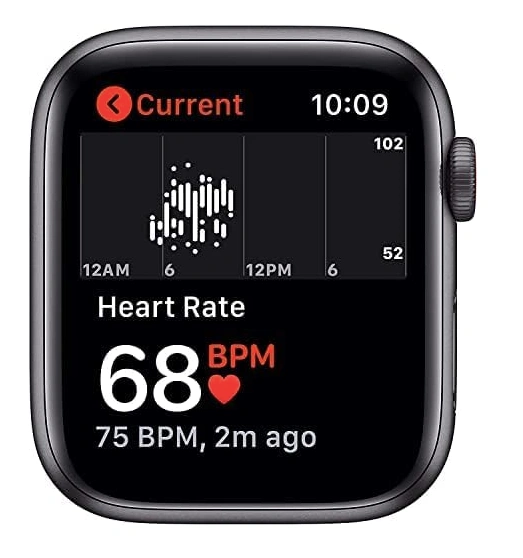
Important features include:
- High and low heart-rate notifications
- Irregular rhythm notifications
- Sleep stages and sleep score
- Sleep apnea notifications
- Fall Detection
- Crash Detection
- Emergency SOS
- Check In
- Built-in GPS
- Calls, messages and app notifications
Fall Detection is particularly relevant for buyers who want additional safety features. When the watch detects a potentially serious fall, it can prompt the wearer and, under supported conditions, contact emergency services if the person does not respond.
Emergency SOS can also help users contact emergency services. However, connectivity requirements matter. GPS-only models generally need a nearby connected iPhone or another supported connection, while cellular models can offer more independence when properly configured and connected.
There are also important health-feature limitations. The Apple Watch SE 3 does not include the ECG app or Blood Oxygen app. Its irregular rhythm notifications are not the same as an ECG reading.
Battery life is another trade-off. Apple estimates up to 18 hours of normal use and up to 32 hours in Low Power Mode, so most users should expect to charge it regularly.
The SE 3 is also more complicated than a basic fitness band. Users who are unfamiliar with smartphone apps may need help with initial setup, notifications, contacts and emergency settings.
Best for: Seniors who use an iPhone and want a connected smartwatch with activity tracking, communication and supported safety features.
4. Garmin vívosmart 5: Best for Simple Fitness Tracking and Battery Life
The Garmin vívosmart 5 is a lightweight fitness band designed for people who want essential activity and wellness information without a full smartwatch interface.
Its narrow design and simple controls make it an alternative to larger watches. Garmin also provides a larger display than the previous vívosmart generation, helping users check everyday statistics more easily.
Key features include:
- 24-hour heart-rate monitoring
- Step and activity tracking
- Sleep tracking and sleep score
- Stress monitoring
- Body Battery energy monitoring
- Pulse Ox tracking
- Connected GPS
- Up to seven days of estimated battery life
One of its useful features is Body Battery, which estimates energy levels using information such as activity, stress and sleep. It can help users understand general activity and recovery trends, although it should not be treated as a medical measurement.
The vívosmart 5 does not have built-in GPS. It uses a compatible smartphone’s GPS connection to record outdoor activity routes, so users need to carry their phone when they want GPS-based distance and pace information.
Garmin also offers Assistance and Incident Detection features under supported conditions. These require setup in Garmin Connect and a compatible connected phone. They are supplemental safety tools and do not independently contact emergency services on the user’s behalf.
The vívosmart 5 offers up to seven days of battery life, although actual performance depends on enabled features and usage.
Its main drawback is its small display. People who need larger text, more visible information or a broader smartwatch experience may prefer the Apple Watch SE 3.
Best for: Seniors who want a lightweight fitness band, straightforward wellness tracking and fewer charging interruptions.
Explore More: Best Garmin Watch for Running
Quick Comparison: Best Fitness Trackers for Seniors
| Device | Best For | GPS | Estimated Battery Life | Main Strength |
| Fitbit Charge 6 | Overall fitness tracking | Built-in GPS | Up to 7 days | Broad fitness and wellness features |
| Fitbit Inspire 3 | Beginners | Connected GPS | Up to 10 days | Lightweight design and simplicity |
| Apple Watch SE 3 | iPhone users and safety features | Built-in GPS | Up to 18 hours | Smartwatch connectivity and safety tools |
| Garmin vívosmart 5 | Everyday activity tracking | Connected GPS | Up to 7 days | Lightweight design and wellness insights |
Battery estimates are manufacturer figures under specified conditions. Actual results vary with settings, GPS use, notifications, display settings and other factors. Connected GPS requires a compatible paired phone.
Why Fitness Trackers Can Be Useful for Seniors
A fitness tracker can be more than a step counter. It can help older adults understand daily movement, recognize activity patterns and stay motivated to maintain regular routines.
Monitoring Everyday Activity
Step counts, walking distance and active-minute information can help users follow their daily movement.
Rather than focusing on an arbitrary target, users can begin with realistic activity goals and gradually adjust them based on their abilities and professional guidance where needed.
Understanding Sleep Patterns
Sleep tracking can provide estimates of sleep duration and different sleep stages. Reviewing these trends may help users notice changes in their routines.
However, consumer sleep trackers do not diagnose sleep disorders. Persistent sleep concerns should be discussed with a healthcare professional.
Following Heart-Rate Trends
Many fitness trackers measure heart rate throughout the day and during exercise. Reviewing trends can help users understand how their heart rate changes with activity and rest.
Some devices also offer high or low heart-rate notifications. These features are not a replacement for clinical heart monitoring or medical advice.
Encouraging Regular Movement
Activity reminders can encourage users to stand, walk or take short movement breaks during the day.
For people who spend long periods sitting, these prompts can be a useful way to build more movement into everyday routines.
Supporting Communication and Independence
Some smartwatches offer location sharing, emergency calling or fall detection. These features may provide additional support for people who live independently.
However, a standard fitness tracker should not be assumed to provide emergency response. Buyers should check exactly what the device can do, what phone connection it requires and whether any subscription or service plan is needed.
Key Features Seniors Should Prioritize Before Buying
Not every feature is equally important. The best fitness tracker for an older adult is the one that fits their daily routine, physical comfort and technology preferences.
1. Easy-to-Read Display
A readable screen can make a major difference.
Look for:
- Large, clear numbers
- Adjustable text where available
- Good screen brightness
- Simple watch faces
- Clear menus and icons
- Easy access to frequently used information
A larger smartwatch display may be easier to read than a narrow fitness band. If possible, check the screen in person before buying.
2. Simple Controls and Navigation
A device with too many menus and settings can become frustrating.
Consider whether the wearer would prefer:
- A touchscreen
- Physical buttons
- A combination of both
- Simple activity screens
- Easy access to the time, steps and heart rate
Physical buttons can be useful for people who find touchscreens difficult, especially during exercise.
3. Comfortable Fit and Adjustable Bands
Comfort matters because a tracker needs to be worn consistently to collect useful activity information.
Look for a lightweight design, an adjustable strap and a comfortable material. People with sensitive skin or wrist discomfort should check the band material and fit carefully.
A device should be snug enough to track movement and heart rate but not so tight that it causes irritation.
4. Battery Life and Charging Convenience
Charging frequency can influence whether someone continues using a wearable.
Fitness bands such as the Fitbit Inspire 3 and Garmin vívosmart 5 offer longer estimated battery life than the Apple Watch SE 3.
Before buying, consider:
- How often the device needs charging
- Whether the charging connector is easy to attach
- Whether the charging cable is easy to replace
- Whether the wearer can manage charging independently
A charging routine that fits naturally into the day is often more practical than choosing a device based on its longest advertised battery estimate.
5. Health and Activity Features
For many users, the essentials are enough:
- Step counting
- Walking and exercise tracking
- Heart-rate monitoring
- Sleep tracking
- Activity reminders
- Distance estimates
More advanced features such as ECG, blood oxygen tracking and stress monitoring should be considered optional extras rather than requirements.
6. GPS and Location Sharing
GPS can be useful for outdoor walks and exercise routes, but it is important to understand the difference between built-in GPS and connected GPS.
A device with built-in GPS can record supported outdoor routes without relying on a phone for its GPS signal.
A connected-GPS tracker uses the paired smartphone’s GPS. The phone needs to be nearby and properly connected.
Location sharing is a separate feature. It may require a compatible phone, mobile data, app permissions and setup by the wearer or a family member.
Read More: Wearables for Sports Performance Tracking
7. Fall Detection and Emergency Assistance
Fall detection and emergency calling can be useful for some older adults, but these features are not available on every fitness tracker.
Before buying, check:
- Whether fall detection is included
- Whether emergency services can be contacted automatically
- Whether the device needs a paired phone
- Whether a cellular plan is required
- Whether emergency contacts must be configured
- Whether the feature works in the user’s country
Fall detection is not guaranteed to recognize every fall. It can also generate false alerts.
If emergency response is a primary requirement, consider a dedicated medical alert device with an appropriate monitoring service rather than relying solely on a fitness tracker.
8. Subscription Costs and App Requirements
The purchase price is not always the total cost of ownership.
Some wearable platforms offer additional insights, coaching, workout content or historical data through paid memberships.
Check which features are free, which require a subscription and whether the app is compatible with the wearer’s phone.
A simple device with no recurring fee may be a better long-term value for someone who only needs basic activity tracking.
Fitness Tracker vs Smartwatch vs Medical Alert Device
These three categories overlap, but they are designed for different purposes.
| Device Type | Main Purpose | Typical Features |
| Fitness tracker | Everyday activity and wellness monitoring | Steps, heart rate, sleep, activity reminders |
| Smartwatch | Communication, apps, fitness and safety | Calls, notifications, GPS, workouts, emergency features |
| Medical alert wearable | Access to emergency assistance | SOS button, emergency response, location support and monitoring options |
A fitness tracker is usually the simplest option for someone who wants to monitor daily activity.
A smartwatch is more suitable for someone who wants communication, apps and additional safety features.
A medical alert wearable may be more appropriate when access to emergency assistance is the main requirement. Some services include professional monitoring, but they may involve recurring fees.
Do not assume that a device with fall detection automatically includes a staffed emergency response service.
Check Out: Amazfit Active 2 vs Fitbit Versa 4 The Smarter Budget Fitness
Detailed Buying Advice: What Makes a Senior-Friendly Wearable?
Simplicity Can Be More Valuable Than Extra Features
Premium smartwatches often include extensive apps, sports profiles and advanced analytics. These features can be useful, but they may not benefit someone who only wants to monitor daily activity.
A simple interface, readable display and easy charging routine can make a device more practical over time.
Comfort Encourages Consistent Use
A wearable that feels bulky or uncomfortable may end up unused.
Consider wrist size, strap material, weight and whether the device is comfortable during sleep. If the wearer has arthritis or limited hand mobility, check whether the clasp and charging connector are easy to manage.
Phone Compatibility Should Be Checked First
Not all wearables work with every smartphone.
The Apple Watch SE 3 requires an iPhone. Fitbit and Garmin devices support compatible Android and iOS phones, although specific features may vary by operating system.
Before purchasing, check the manufacturer’s compatibility requirements and confirm that the wearer’s phone can install and run the companion app.
Wellness Readings Have Limitations
Consumer wearables estimate health and fitness information using sensors and software. Results can vary with movement, wrist fit, skin characteristics, device settings and other factors.
Heart-rate and blood oxygen readings should not be treated as a diagnosis. If a reading causes concern or symptoms occur, contact a healthcare professional rather than relying on the watch alone.
Check Out:Best Smart Watches Under $200
Advantages of Fitness Trackers for Seniors
Encourages Everyday Movement
Step counts, activity goals and reminders can help users build consistent movement into their daily routines.
Makes Activity Trends Easier to Review
A companion app can display changes in steps, sleep and exercise over time.
Supports Sleep Awareness
Sleep tracking can help users review their sleep schedules and general patterns.
Offers Convenient Wellness Information
Heart-rate and activity summaries provide a quick overview of everyday movement and exercise.
Can Support Independent Living
Some smartwatches offer location sharing and emergency features that may provide additional support when properly configured.
Limitations and Things to Consider
Fitness Trackers Are Not Medical Devices
Most consumer fitness trackers are designed for wellness and activity information, not for diagnosing or treating health conditions.
Fall Detection Can Miss Events
Fall detection is not foolproof. A watch may fail to recognize some falls or produce a false alert.
Some Features Depend on a Smartphone
GPS sharing, notifications, setup and emergency contact functions may require a paired phone and an active connection.
Small Screens Can Be Difficult to Read
Slim fitness bands are lightweight, but their narrow displays may not suit everyone.
Advanced Features May Require Subscriptions
Some platforms charge for premium insights, coaching and additional app content.
Who Should Consider a Fitness Tracker for Seniors?
A fitness tracker or smartwatch may be useful for:
- Older adults who want to monitor daily steps
- Seniors interested in tracking walking routines
- People who want basic heart-rate and sleep information
- Active older adults who exercise regularly
- iPhone users who want smartwatch and safety features
- Seniors who prefer a lightweight fitness band
- People who want reminders to move throughout the day
- Older adults who want to review activity trends with family or caregivers
The right device depends on the wearer’s comfort, preferences, phone and specific needs. Not every senior needs a smartwatch, and not every user needs fall detection or advanced health sensors.
Read More: Best Sleep Tracking Wearables of 2026
Frequently Asked Questions
Are fitness trackers good for seniors?
Yes. Fitness trackers can help older adults monitor everyday activity, steps, heart-rate trends and sleep patterns. They can also encourage regular movement through activity goals and reminders. They should be viewed as wellness tools rather than replacements for medical care.
Which fitness tracker is easiest for seniors to use?
The easiest option depends on the wearer. The Fitbit Inspire 3 is a lightweight band focused on essential tracking, while the Garmin vívosmart 5 offers a simple fitness-focused experience. Buyers who need larger text or a broader interface may prefer a full smartwatch with a larger display.
Do fitness trackers help seniors stay active?
They can. Step counts, activity reminders and progress summaries may encourage users to build regular movement into their routines. Activity goals should be realistic and appropriate for the individual’s abilities.
What features should seniors look for in a fitness tracker?
Useful features include a readable display, simple controls, comfortable band, heart-rate monitoring, step tracking, sleep tracking and convenient battery life. GPS, emergency SOS and fall detection may also be important for some users, but they are not essential for everyone.
Can fitness trackers detect falls?
Some smartwatches include fall-detection features, but many basic fitness bands do not. Detection is not guaranteed, and some features require a compatible phone, cellular connection or specific setup. A dedicated medical alert device may be more appropriate when emergency response is the main priority.
Is Fitbit good for seniors?
Fitbit offers several options for older adults. The Inspire 3 focuses on basic activity and sleep tracking, while the Charge 6 adds built-in GPS and additional health features. Buyers should consider screen size, phone compatibility and any premium subscription requirements.
Are Garmin watches suitable for seniors?
Yes. The Garmin vívosmart 5 offers heart-rate monitoring, activity tracking, sleep information and up to seven days of estimated battery life. Its GPS functionality relies on a compatible connected phone, so it is important to understand that limitation before buying.
What is the easiest smartwatch for older adults?
The easiest smartwatch for senior citizens is generally one with a simple interface, large icons, health tracking features, and minimal setup requirements.
Can fitness trackers monitor heart rate accurately?
Most modern fitness trackers provide reasonably accurate heart rate estimates during daily activities, though they should not be considered medical-grade devices.
Which fitness tracker has the longest battery life for seniors?
Among the four models compared here, the Fitbit Inspire 3 has the longest advertised battery life at up to 10 days. Garmin vívosmart 5 and Fitbit Charge 6 are rated for up to seven days, while Apple Watch SE 3 is rated for up to 18 hours of normal use. Actual results vary with settings and usage.
Does the Apple Watch SE 3 have fall detection?
Yes. The Apple Watch SE 3 includes Fall Detection, Emergency SOS and Crash Detection. The ability to contact emergency services independently depends on the model, connectivity and setup. The SE 3 does not include the ECG app or Blood Oxygen app.
Do seniors need a smartwatch or a fitness tracker?
A fitness tracker is generally sufficient for people who mainly want steps, activity and sleep information. A smartwatch is more appropriate for users who also want calls, messages, apps, GPS and supported safety features.
Final Verdict: Which Fitness Tracker Should Seniors Buy?
The best fitness tracker for seniors is not necessarily the most expensive or feature-packed wearable. It is the device that feels comfortable, is easy to operate and provides information the wearer will actually use.
The Fitbit Charge 6 is a strong all-around option for people who want built-in GPS and a broad set of fitness and wellness features. The Fitbit Inspire 3 is a simpler choice for basic activity and sleep tracking. The Apple Watch SE 3 is worth considering for iPhone users who want communication and supported safety features. The Garmin vívosmart 5 offers a lightweight design, everyday wellness tracking and up to seven days of estimated battery life.
Before choosing, consider the wearer’s phone, screen preferences, ability to charge the device, comfort and need for emergency support.
A wearable should make everyday life easier, not add another complicated device to manage. For many older adults, a straightforward fitness tracker that encourages movement and helps monitor wellness trends can be a more practical purchase than a premium smartwatch.
Read More:Smart Wearable Technology
